
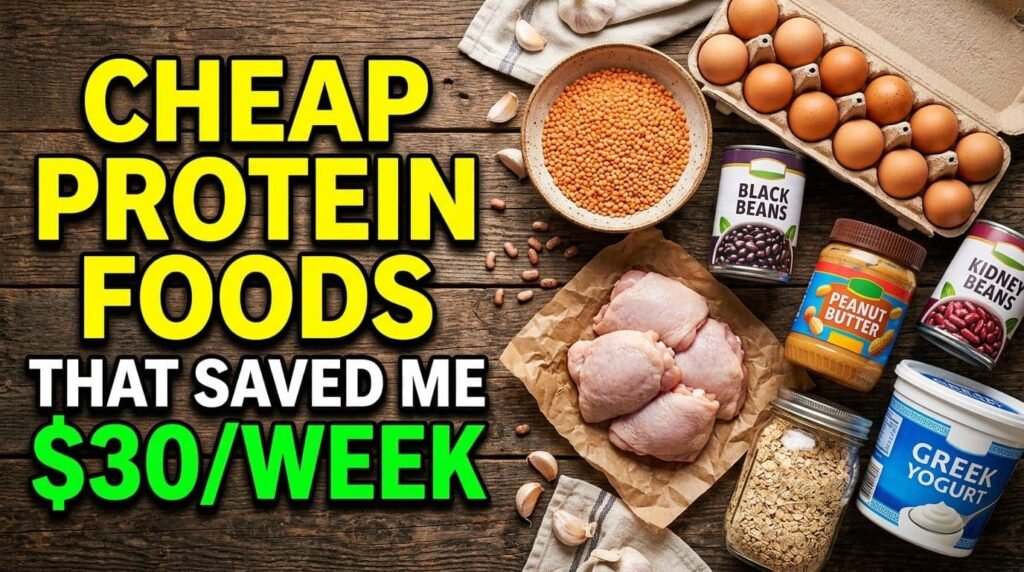
Three years ago I decided I was going to “get serious” about protein. I’d read somewhere that most people don’t eat enough of it, and I’d started lifting at a cheap gym near my apartment, so I figured I should do this properly.
My first move was buying a huge tub of chocolate protein powder for $38. My second was picking up a stack of pre-cooked chicken breast packs and some fancy protein bars at $2.50 each, instead of choosing cheap high protein foods that could have saved me money.
By the end of week two, the powder tasted like chalky regret, the chicken packs were eating my grocery budget alive, and I’d spent roughly $70 more than usual to eat maybe 20 extra grams of protein a day.
That’s when a friend who’d been cooking on a tight budget for years looked at my cart and said, “You know eggs exist, right?”
She wasn’t wrong. Over the next few months, I rebuilt how I ate around cheap, filling, protein-rich staples. My weekly grocery bill dropped back to somewhere around $45 to $55, and I was getting more protein than before. This is what I learned, including the dumb mistakes.
A quick note on cheap high protein foods

I’m not a doctor or a registered dietitian. Everything here comes from my own experience as a regular adult who got tired of overspending on food.
Protein needs vary a lot based on your age, size, activity level, and health. If you have kidney disease, are pregnant, are managing a medical condition, or take medication that interacts with diet, talk to a doctor or dietitian before changing how much protein you eat. More isn’t always better, and the right amount for me may not be right for you.
How much protein do you actually need?
This was another thing I got wrong. I assumed bodybuilders and gym-goers needed huge amounts, so I aimed for numbers I’d seen online without checking whether they made sense for me.
General guidance for healthy adults is around 0.8 grams of protein per kilogram of body weight per day as a baseline, with some active people and older adults often doing better with more. That’s a very rough starting point, not a prescription.
For a lot of people, that works out to something like 50 to 100 grams a day. You don’t need to hit a magic number every single day. The goal is to spread protein across meals so you stay full and steady, which is where I noticed the biggest difference.
If you want a more tailored number, a registered dietitian can help, and the free calculators in apps like Cronometer or MyFitnessPal can give you a ballpark to start with.
The cheapest protein sources I actually use
This is the heart of it. I compared prices at a few stores, and these are the foods that consistently gave me the most protein per dollar. Prices change depending on where you live, so check unit prices on the shelf tags.
Dried lentils. Roughly 18 grams of protein per cooked cup, and a bag costs very little. They cook in about 20 minutes without soaking.
Dried or canned beans and chickpeas. Black beans, kidney beans, white beans, and chickpeas all pack protein and fiber. Dried is cheapest, and canned is still affordable and faster.
Chicken thighs and drumsticks. Cheaper per pound than breasts, more flavorful, and much harder to dry out. Buy the family pack and freeze portions.
Canned tuna and sardines. Easy, shelf-stable protein. A can of tuna can have around 20 grams or more of protein.
Plain Greek yogurt (big tub). Usually more protein than regular yogurt, and the large tubs beat the little flavored cups on price.
Cottage cheese. Surprisingly high protein for the price. It’s an acquired taste, but mixing it with fruit or spices helps.
Tofu and tempeh. Good plant-based options. A block of tofu is cheap and soaks up whatever flavor you give it.
Peanut butter. About 7 to 8 grams of protein per two tablespoons. It’s calorie dense, so portions matter, but it’s cheap and filling.
Oats. Not a high-protein food by themselves, but they add a few grams and make a great base for breakfast.
Milk and soy milk. Both add protein, and fortified soy milk is a good plant-based pick.
Whole chicken. Usually the cheapest way to buy chicken overall, and you get leftovers plus bones for soup.
What I stopped buying
- Fancy protein bars. Expensive and often loaded with sugar or sugar alcohols. I eat them only as an emergency snack now.
- Pre-cooked chicken packs. Convenient, yes, but you pay a lot for the convenience.
- Specialty “high protein” products. Pasta, bread, and cereals marketed as high protein cost more and often deliver less than you’d think.
- Protein powder, for me. Some people love it and use it smartly. I didn’t need it, and the money was better spent on real food. If you like it, buy a plain or simple one when it’s on sale.
Meal ideas that keep me full without wrecking my budget

Breakfasts
Egg and bean breakfast tacos. Scrambled eggs, black beans, and a little cheese in a warm tortilla. Roughly 20 grams of protein, and it takes about 10 minutes.
Greek yogurt and oats bowl. Plain Greek yogurt with oats, frozen berries, and a spoonful of peanut butter. Filling, cheap, and no cooking.
Veggie omelet. Two or three eggs, whatever vegetables are about to go bad, and a sprinkle of cheese.
Peanut butter banana oatmeal. Cook oats with milk instead of water, then stir in peanut butter. It’s a protein bump without the powder.
Lunches
Lentil soup. Lentils, onion, carrot, garlic, canned tomatoes, cumin, and a squeeze of lemon. I make a big pot, and one serving costs about $1.50.
Tuna and chickpea salad wrap. Mash chickpeas with canned tuna, a little mayo or yogurt, mustard, and chopped celery or onion. Tuck it in a tortilla.
Rice, beans, and a fried egg. My go-to broke-week lunch. Add hot sauce and whatever vegetables you have.
Cottage cheese bowl. Cottage cheese with cucumber, tomato, salt, pepper, and olive oil for a savory version. Or go sweet with fruit.
Dinners
Sheet-pan chicken thighs, potatoes, and broccoli. Season, roast, done. Leftovers become lunch.
Chili with beans. Use beans, canned tomatoes, onion, and spices. Add ground turkey or beef if you eat meat. A big pot lasts several meals.
Egg fried rice. Cold rice, scrambled eggs, frozen peas and carrots, soy sauce. It’s quick and way cheaper than takeout.
Chickpea curry. Canned chickpeas, onion, garlic, canned tomatoes, curry powder or garam masala, and a splash of coconut milk if you have it. Serve with rice.
Lentil bolognese. Brown lentils cooked in tomato sauce over pasta. It’s hearty, and even meat lovers in my family didn’t complain.
Baked sardines or salmon patties. Canned fish mixed with egg, breadcrumbs, and spices, then pan-fried. Surprisingly good.
Snacks
- Hard-boiled eggs
- Roasted chickpeas (toss canned chickpeas in oil and spices, bake until crunchy)
- Cottage cheese with fruit
- Peanut butter on apple slices or toast
- Greek yogurt with a drizzle of honey
- Edamame, if you can find frozen bags cheaply
A sample day (roughly 90 to 110 grams of protein)
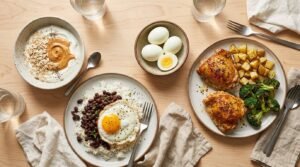
This is an example, not a prescription. Portions and totals will vary.
- Breakfast: Greek yogurt with oats and peanut butter (about 25 g)
- Lunch: Rice, black beans, and a fried egg with vegetables (about 25 g)
- Snack: Hard-boiled eggs or cottage cheese (about 12 to 14 g)
- Dinner: Chicken thighs with potatoes and broccoli (about 30 to 35 g)
For a vegetarian or plant-based day, you could swap the chicken for cheap high protein foods like lentil curry or tofu stir-fry, and use soy milk or dairy-free yogurt. Check labels, since protein content varies by product.
Step-by-step: how I plan a high-protein budget week

Here’s the process I follow now. It takes me about 20 minutes.
1. Pick two or three protein “anchors” for the week. For example, eggs, lentils, and chicken thighs.
2. Choose a cheap carb and a vegetable base. Rice, potatoes, or oats. Frozen vegetables, carrots, cabbage, or whatever’s on sale.
3. Write three dinners and reuse them for lunches. Leftovers are the cheapest meal prep there is.
4. Check store flyers. I use the Flipp app to see what’s discounted, and I plan around the deals.
5. Shop with a list. Sticking to it saved me from my old protein-bar habit.
6. Cook one or two big batches. Lentil soup, chili, or a tray of chicken. Portion into containers.
7. Freeze extras. Soup, cooked beans, chicken, and even cooked rice freeze well.
Real example: how my cousin Arjun does it as a student
My cousin Arjun is in his second year of university and had a grocery budget of about $30 a week. He wanted more protein because he’d started playing recreational soccer, but he couldn’t afford meat every day.
His setup was simple. He bought a big bag of lentils, a tray of eggs, canned chickpeas, oats, peanut butter, and frozen vegetables. He made dal on Sundays and ate it with rice for three dinners. Eggs and oats covered breakfast. When he had a little extra, he picked up a pack of chicken thighs.
After about six weeks, he said he felt less hungry between classes and wasn’t spending money on convenience store snacks. It wasn’t fancy, but it worked within his budget.
Tools and apps that earned a spot in my routine
- Flipp: Checks local store flyers so I can build meals around sales.
- Cronometer or MyFitnessPal (free versions): Useful for a short stretch to see how much protein you’re getting. I tracked for about two weeks, then stopped.
- Mealime: Gave me quick recipe ideas and made shopping lists.
- A slow cooker: Perfect for lentils, beans, chili, and shredded chicken. I bought mine secondhand.
- Rice cooker: Not required, but great if you eat rice often.
- Glass containers: For batch cooking and freezing.
- A kitchen scale (optional): Handy for the first couple of weeks to learn portion sizes.
Mistakes I made (so you don’t have to)

Chasing protein numbers and ignoring everything else. At one point I was so focused on grams that I ate too little fiber and vegetables. I felt sluggish and a bit bloated. Balance matters.
Buying lots of expensive “high protein” labels. A bag of chips with 10 grams of protein is still a bag of chips. Real food does more for you.
Eating chicken breast daily. I got so sick of it that I quit meal prepping for a week. Variety keeps this sustainable.
Skipping flavor. Plain boiled lentils taste like sadness. A little cumin, garlic, chili, lemon, and salt changes everything.
Adding too much fiber too fast. I went from almost no beans to eating them daily, and my stomach protested. If you’re not used to beans and lentils, build up gradually and drink water.
Not storing food properly. I lost a batch of chili to the back of the fridge once. Label containers with dates, and freeze what you won’t eat in three or four days.
Forgetting cooked beans need seasoning. Rinse canned beans, then season them. They’re a blank canvas, and salt, spices, and acid wake them up.
Skipping water. Higher protein and fiber intake made me notice that I needed to drink more. If you’re increasing both, keep a bottle nearby.
What changed after a couple of months
Here’s the honest version:
- My grocery spending dropped by about $25 to $30 a week compared to my protein-powder-and-packs phase.
- I felt fuller between meals and snacked less at my desk.
- My gym recovery felt better, though I’m sure sleep and training mattered too.
- I cooked more at home and ordered takeout less.
- I didn’t turn into a bodybuilder, and I’m not claiming food alone does that. It was a steady improvement in how I ate and how much I spent.
FAQs
What are the cheapest high-protein foods?
Eggs, dried lentils, dried or canned beans, chickpeas, canned tuna, chicken thighs or whole chickens, peanut butter, plain yogurt, cottage cheese, and tofu tend to be the best value. Prices vary by region, so compare unit prices.
Can I get enough protein on a vegetarian or vegan budget?
Yes, with some planning. Cheap high protein foods like lentils, beans, chickpeas, tofu, tempeh, soy milk, peanut butter, oats, and whole grains all contribute. Eggs and dairy make it easier if you eat them. Combining a variety of plant proteins across the day works well.
Is protein powder necessary?
No. Some people like it for convenience or to hit higher targets, but most people can meet their needs with regular food. If you try it, buy a simple, reasonably priced product and see whether you actually use it.
How much protein should I eat per meal?
There’s no single rule. Many people aim for roughly 20 to 30 grams per meal, but your ideal amount depends on your size, activity, and goals. Spreading protein across meals helps with fullness.
Are canned beans as good as dried?
Nutritionally, they’re very similar. Dried beans are cheaper and canned are faster. Rinse canned beans to cut down on extra sodium.
Is it safe to eat a lot of protein?
For most healthy adults, moderately high protein intake is generally considered fine. But people with kidney problems or certain medical conditions may need to limit it. Check with your doctor if you’re unsure.
How do I keep high-protein meals from getting boring?
Rotate sauces and spices. Lentils can be curry, soup, tacos, or bolognese. Eggs can be fried rice, omelets, or breakfast tacos. Swap your seasoning and the same base tastes new.
Can I eat high protein and still lose weight?
Protein can help with fullness, which may support weight management. But total calories, portions, sleep, and activity still matter. This isn’t a guarantee of weight loss.
How do I store and reheat meal-prepped protein foods safely?
Cool food quickly, refrigerate in airtight containers, and eat within three to four days. Freeze extras for longer storage. Reheat until steaming hot.
What if I have a food allergy?
Choose substitutes that fit your needs. Soy, egg, peanut, dairy, and fish are all common allergens, so read labels and talk to a healthcare professional for personalized guidance.
A short shopping list you can screenshot
- Eggs
- Dried lentils and a bag of dried or canned beans
- Canned chickpeas
- Chicken thighs or a whole chicken
- Canned tuna or sardines
- Plain Greek yogurt (large tub)
- Cottage cheese
- Peanut butter
- Oats
- Rice and potatoes
- Frozen vegetables
- Canned tomatoes
- Onions, garlic, and a few spices (cumin, paprika, chili flakes)
Final thoughts
I still think about that $38 tub of powder every time I scramble a couple of eggs. It’s funny how long I spent hunting for a complicated solution when cheap high protein foods like eggs, lentils, and rice were quietly doing the job for a fraction of the cost.
If you’re just starting, don’t try to overhaul everything. Pick two or three cheap protein foods you like, cook one big batch this weekend, and see how your week feels. Tweak things as you go.
You don’t need fancy labels or expensive supplements. You need a handful of reliable staples, a few good spices, and a plan that fits your real life, including the tired Tuesdays.