
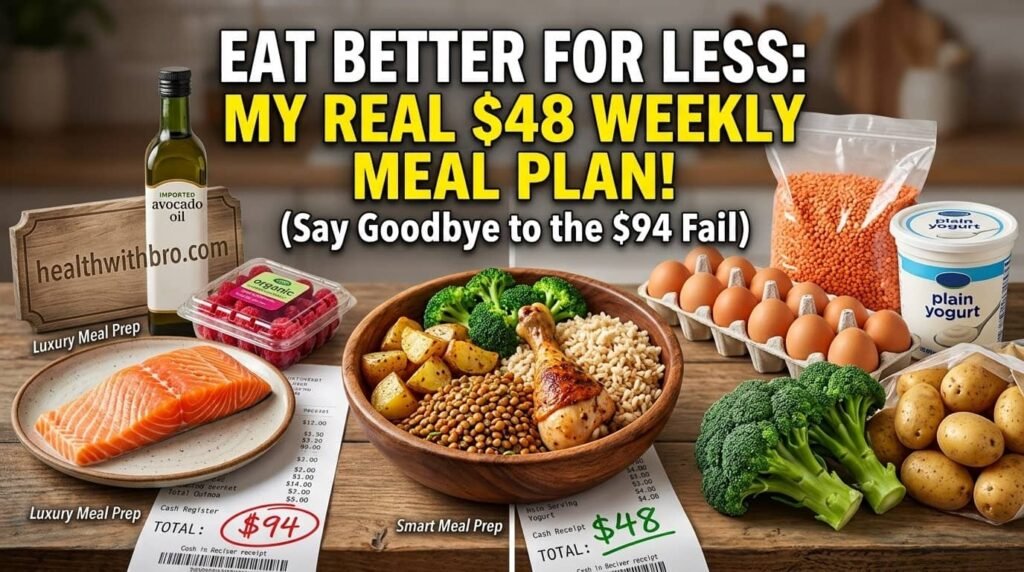
If you want to start an affordable healthy meal plan for beginners, you don’t need a huge budget or fancy superfoods. The receipt from my first grocery run was longer than my arm—okay, not literally, but it felt that way.
I’d decided to “eat better” after a rough stretch of takeout and cereal dinners. So I walked into the store with a vague plan, filled the cart with quinoa, fresh salmon, three kinds of berries, a fancy olive oil, almond flour, and some green powder that promised to “support my gut.” The total came to $94 for one person.
By Thursday, half the produce had gone limp in the fridge. The salmon got cooked once. I ordered a pizza on Friday and felt like a failure.
The problem wasn’t willpower. The problem was that I thought healthy eating had to look like an Instagram pantry, and that it had to be expensive. It doesn’t. After a lot of trial and error (and a few embarrassing food-waste moments), I got my weekly grocery bill down to roughly $40 to $50 while eating better than I had in years.
This is what I’d tell a friend who’s standing where I was.
What I Got Wrong Before Finding an Affordable Healthy Meal Plan for Beginners

Before the plan, let me save you from my first three attempts.
I bought ingredients instead of meals. I had nice things, but nothing that turned into dinner. A bag of quinoa and a bunch of kale don’t make a meal if you don’t know what to do with them at 7pm when you’re tired.
I bought “health” products. Protein powders, superfood blends, specialty snacks. They were expensive and mostly unnecessary. Plain oats, eggs, beans, and frozen vegetables do the same job for a fraction of the price.
I planned for the person I wished I was. That person cooks elaborate dinners every night. The real me wanted something fast after a long day. A plan only works if it fits your actual Tuesday. Once I stopped fighting that, things got easier.
What a “healthy” meal actually needs
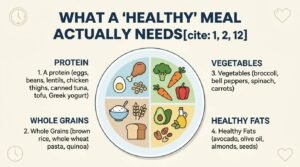
I overcomplicated this for a long time. Here’s the simple version I use now.
Most meals I build have four parts:
1. A protein (eggs, beans, lentils, chicken thighs, canned tuna, tofu, Greek yogurt)
2. A fiber source (vegetables, beans, oats, whole grains)
3. A filling carb (rice, potatoes, pasta, bread, oats)
4. A little fat or flavor (olive oil, peanut butter, cheese, a good sauce)
That’s my simple starting point. Not every meal needs to contain all four components, but combining protein, fiber-rich foods, carbohydrates, and some healthy fat across your meals can help make your eating pattern more balanced and satisfying
I’m not a dietitian, and everyone’s needs are different. If you have a medical condition, allergies, take medication, or are pregnant, check with a doctor or registered dietitian first. This is what worked for me as an ordinary adult trying to eat more sensibly on a budget.
Step 1: Figure out your real budget
Before I shopped, I looked at what I’d actually been spending. I went through a month of bank statements and added up groceries plus takeout. It was around $420, and over half was takeout and delivery fees.
That number surprised me. It also gave me a target. I decided on $50 a week for groceries and used any savings to pay down a credit card.
Your number will be different. A solo person in a big city, a family of four, and a student in a small town all face different prices. Pick a number that feels slightly tight but doable, and adjust after two weeks.
Step 2: Build your list around cheap staples
This was the big shift. I stopped shopping by recipe and started shopping by staples, the foods that are cheap, filling, and flexible.
Here’s what’s usually in my cart:
Proteins
- Eggs (a dozen is still one of the cheapest protein sources around)
- Dried or canned beans and lentils
- Chicken thighs or drumsticks (cheaper than breasts and harder to overcook)
- Canned tuna or sardines
- Plain yogurt in the big tub
- Tofu if you like it
Carbs and grains
- Rice (a big bag lasts forever)
- Pasta, ideally whole wheat if you like it
- Potatoes and sweet potatoes
- Bread or tortillas
Vegetables and fruit
- Frozen vegetables (broccoli, spinach, mixed veg, peas)
- Cabbage, carrots, and onions (cheap and long-lasting)
- Canned tomatoes
- Bananas and apples
- Frozen berries instead of fresh
Flavor makers
- Garlic, onions, cumin, paprika, chili flakes
- Soy sauce, hot sauce, mustard
- A cheap bottle of vegetable or olive oil
- Lemons when they’re on sale
Frozen vegetables were a game changer for me when setting up an affordable healthy meal plan for beginners. They’re picked and frozen quickly, they don’t rot in the crisper drawer, and I stopped throwing away money.
If you’re just starting, try one thing this week. Cook a big pot of something on Sunday, make your list before you shop, and leave out the fancy extras.
Step 3: Pick where you shop (it matters more than I expected)
I used to go to one big store out of habit. Then I tried a few options.
- Discount grocers like Aldi or Lidl (where available) were consistently cheaper for basics. My bill dropped by roughly 20% just from switching.
- Ethnic and international markets had huge savings on spices, rice, lentils, and fresh produce. I now buy my cumin and chickpeas at a local South Asian grocery, and it’s a fraction of what the supermarket charges.
- Warehouse stores like Costco worked for rice, oats, frozen veg, and chicken, but only when I didn’t overbuy. Bulk isn’t a deal if it spoils.
- Store brands are usually the same product with a plainer label. I stopped paying extra for names.
Apps helped too. I used Flipp to check weekly sales and *Ibotta* for cash back on a few staples. Neither made me rich, but together they trimmed a few dollars a week. I’d also suggest checking the “reduced” section for meat and bread. I freeze the discounted stuff the same day.
Step 4: Plan a loose week, not a rigid one
I tried a color-coded meal plan once. It lasted until Wednesday. Now I plan loosely.
My rule: cook two or three big batches, then mix and match. Here’s what a typical week looks like.
Sunday (about 90 minutes):
- Cook a big pot of rice
- Make a pot of lentil soup or chili
- Roast a tray of chicken thighs with potatoes and carrots
- Hard-boil six eggs
- Wash and chop a few vegetables
That covers a surprising number of meals.
A sample week of meals (about $45 to $55 for one person)
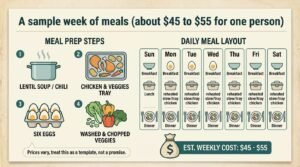
Prices vary, so treat this as a template, not a promise.
Breakfasts
- Oatmeal with banana and a spoonful of peanut butter
- Scrambled eggs on toast with a side of fruit
- Plain yogurt with oats and frozen berries
Lunches
- Lentil soup with a slice of bread
- Rice, beans, and sautéed veggies with hot sauce
- Chicken and roasted potato bowl with a squeeze of lemon
- Tuna and chickpea salad in a wrap
Dinners
- Veggie-loaded pasta with canned tomatoes and white beans
- Egg fried rice with frozen peas and carrots
- Sheet-pan chicken thighs, potatoes, and broccoli
- Chili with beans and rice
Snacks
- Apple with peanut butter
- Hard-boiled egg
- Popcorn made on the stove
- Carrot sticks and hummus
Nothing fancy. But I eat it, which is the whole point.
A real example: how I stretched one chicken
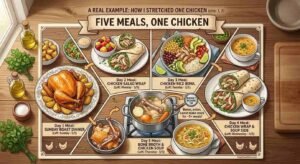
Here’s the thing that made me feel like a budget wizard. One whole chicken was around $7 or $8. I roasted it on Sunday, ate it with potatoes that night, shredded the leftovers into rice bowls and wraps for two more meals, and then boiled the bones with an onion and carrot to make stock for soup.
That’s about five meals from one purchase, and the soup was better than any carton I’d bought. If you’ve never made stock, it’s easier than it sounds. Cover the bones with water, add vegetable scraps and a bit of salt, and simmer for a couple of hours.
My friend Maya’s version (student budget)
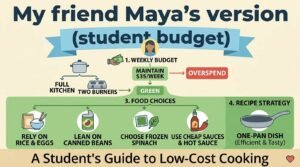
My friend Maya is a college student sharing an apartment. She had about $35 a week and a tiny kitchen with two burners.
She leaned on rice, eggs, canned beans, frozen spinach, and cheap sauces. Her most-used recipe was a one-pan dish of rice, beans, a fried egg on top, and hot sauce. She told me she made it three or four times a week and never got tired of it because she changed the toppings.
She also split bulk bags of rice and oats with her roommate. That cut her costs further. It’s a simple trick, and it works well if you live with people.
Tools and gadgets that actually earned their spot
I don’t own much, and I’m glad I didn’t buy a bunch of gadgets.
- A large pot and a sheet pan. These two items do most of my cooking.
- A rice cooker (I got a basic one secondhand). It’s not essential, but it frees up a burner and makes perfect rice.
- Reusable containers with tight lids. I used cheap glass ones. They survived the microwave and the dishwasher.
- A slow cooker for lentils, chili, and shredded chicken. If you find one at a thrift store, grab it.
- A kitchen scale (optional). I used it for a couple of weeks to learn portion sizes.
- Apps: Flipp for weekly deals, MyFitnessPal for a short awareness experiment, and Mealime for simple recipes. Mealime’s free plan gave me quick ideas when I felt stuck, and it built grocery lists for me.
Skip the air fryer unless you’ll actually use it. I bought one on impulse and it mostly collects dust.
Mistakes I made that you can skip
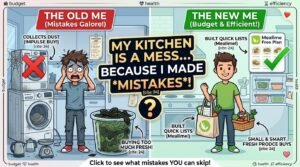
Buying too much fresh produce. Ambition and spinach are a bad pairing. I’d buy a giant tub, use a third, and watch the rest turn to sludge. Now I buy fresh produce for two or three days, and rely on frozen and sturdy vegetables the rest of the week.
Going shopping hungry. Every time, my cart looked like a snack aisle. Eat first, then shop.
Cooking only “boring diet food.” My first plan was plain chicken and steamed broccoli. By day four I hated it. Healthy food needs flavor, and focusing on healthy habits to manage belly fat works much better than restrictive diets.
Cutting out all treats. I tried this and lasted about ten days. Now I leave room for a favorite snack or a takeout night once a week. It makes the rest of the week easier.
Not using what I bought. Wasted food is wasted money. I started a “eat this first” shelf in the fridge, so anything near its end gets cooked soon.
Over-relying on ultra-processed “health” foods. Protein bars, diet snacks, and so-called healthy frozen meals are expensive and often not very filling. Whole foods usually cost less and keep me fuller.
Comparing my meals to social media. Those beautiful bowls often cost a fortune and take hours to assemble. My plain lentil soup isn’t pretty, but it costs about $1.50 a serving.
What changed after two months
I don’t want to overpromise, so here’s the honest summary:
- My grocery bill settled around $45 to $50 a week.
- My takeout spending dropped by more than half. I still ordered food sometimes, but it stopped being the default.
- I had steadier energy in the afternoon. I’m not sure how much of that was food and how much was sleep, but it felt noticeable.
- I stopped throwing away produce every week.
- Cooking became less of a chore and more of a routine.
I didn’t lose a dramatic amount of weight, and I’m not going to claim this is a weight-loss plan. It was a sustainable way of eating that I could afford and keep doing.
A simple 7-day starter plan
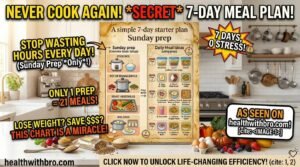
If you want something concrete, here’s a basic setup.
Day 1 (Sunday prep): Cook rice, a pot of beans or lentils, and roast a tray of vegetables. Boil a few eggs.
Day 2: Eggs on toast for breakfast, rice and bean bowl for lunch, veggie pasta for dinner.
Day 3: Oatmeal with fruit, leftover rice bowl with a fried egg, sheet-pan chicken and potatoes.
Day 4: Yogurt and oats, lentil soup, chicken wraps.
Day 5: Oatmeal, tuna and chickpea wrap, egg fried rice with frozen veg.
Day 6: Eggs and fruit, leftover soup, chili and rice.
Day 7: Flexible day. Use leftovers, clean out the fridge, and plan next week.
Adjust it for your tastes, culture, and dietary needs. If you’re vegetarian, lean on beans, lentils, eggs, tofu, and dairy. If you’re gluten-free, swap in rice, potatoes, and corn tortillas.
Quick tips that saved me real money
- Buy a whole chicken instead of pre-cut pieces when you can
- Choose dried beans over canned for the lowest cost, though canned is still very cheap and faster
- Freeze bread, cooked rice, and soup in portions
- Check unit prices on the shelf tag, not just the sticker price
- Keep a “no-spend” pantry challenge week, where you cook only from what you already have
- Make your own coffee or tea instead of buying it out
- Cook once, eat twice: always make enough for leftovers
Final thoughts
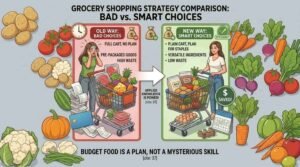
The thing I wish I’d known at the start is that building an Affordable Healthy Meal Plan For Beginners isn’t a mysterious skill. It’s mostly about a handful of boring staples, a few spices, and a plan loose enough to survive a bad week.
My first $94 haul taught me that a full cart doesn’t equal a good plan. These days, my cart looks plain. Rice, eggs, frozen vegetables, lentils, a bag of oats. But I know what each thing becomes, and that’s what makes the difference.
If you’re just starting, try one thing this week. Cook a big pot of something on Sunday, make your list before you shop, and leave out the fancy extras. See how it feels and adjust from there. You don’t need to overhaul your whole life, just make next week a little cheaper and a little better than the last one.